2 August 2026 · 4 min read
Why are the houses in Piran so close together?
Piran's old town was built on a small Adriatic peninsula, so for centuries its houses grew tall, narrow and shoulder to shoulder, the same clustered little houses Nika Horjak Ceramics now shapes by hand in clay.
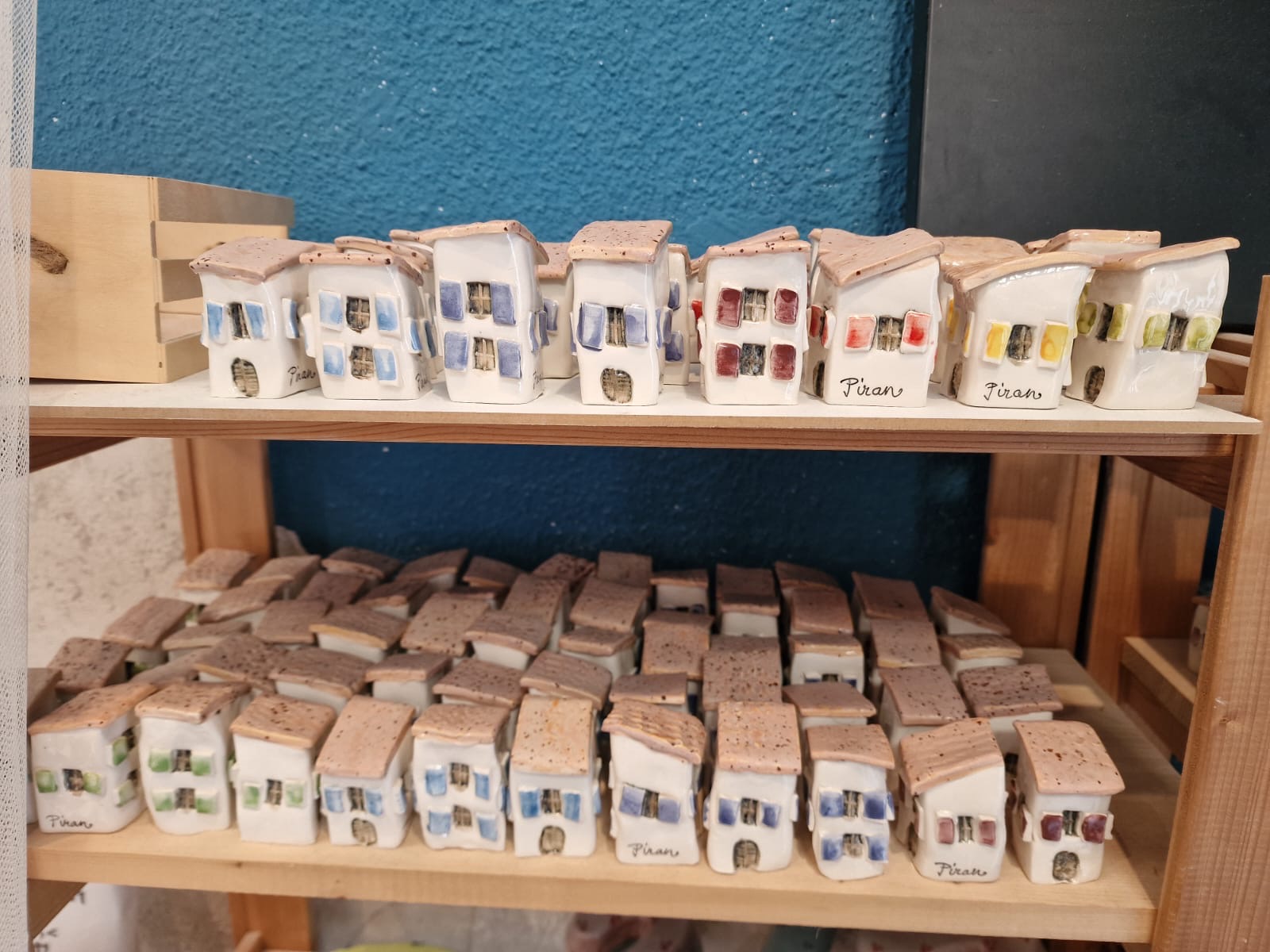
Piran's old town was built on a small, narrow peninsula that juts into the Adriatic, and space there has always been scarce. So for centuries its houses grew the only way they could: tall, slim, and pressed shoulder to shoulder along steep, stepped alleys, under a crowd of red-tiled roofs. That clustered little skyline is exactly what I shape in clay at Nika Horjak Ceramics, my studio a few steps up from the marina. Here is the story those tiny houses carry.
Why are the houses in Piran so close together?
Because the land ran out. Piran sits on the tip of a peninsula barely a few hundred metres wide, walled in on three sides by the sea and on the fourth by its old town walls. There was nowhere to spread, so the town grew upward and inward instead. Houses were built narrow and several storeys tall, sharing walls with their neighbours, divided by alleys sometimes barely wide enough for two people to pass.
The result is the maze visitors love to get lost in: stepped lanes, sudden little squares, washing lines strung between windows, and everywhere those warm terracotta roofs stacked up the hillside toward the bell tower. It is a Mediterranean town written in miniature, which is part of why it fits so naturally into the palm of your hand.
How old is Piran's old town, and who built it this way?
The town is medieval, and much of the face it wears today is Venetian. Piran belonged to the Republic of Venice for more than five hundred years, from 1283 until the republic fell in 1797, and Venice left its handwriting all over the stone. A few quick facts that explain the look:
- The town walls have parts dating to around the 7th century, extended over the centuries into the medieval fortifications you can still climb today for the view over all those rooftops.
- The bell tower of St George's Church, finished in 1608, is a scaled-down replica of St Mark's Campanile in Venice. It is the needle every one of my little houses is gathered around.
- Tartini Square, the town's marble heart, is named after the violinist Giuseppe Tartini, born in Piran in 1692. His house still stands on the square, one of the oldest in town.
- The Venetian Gothic houses, with their arched windows and painted shutters, are why Piran is so often called a little piece of Venice on the Slovenian coast.
What are the little ceramic Piran houses?
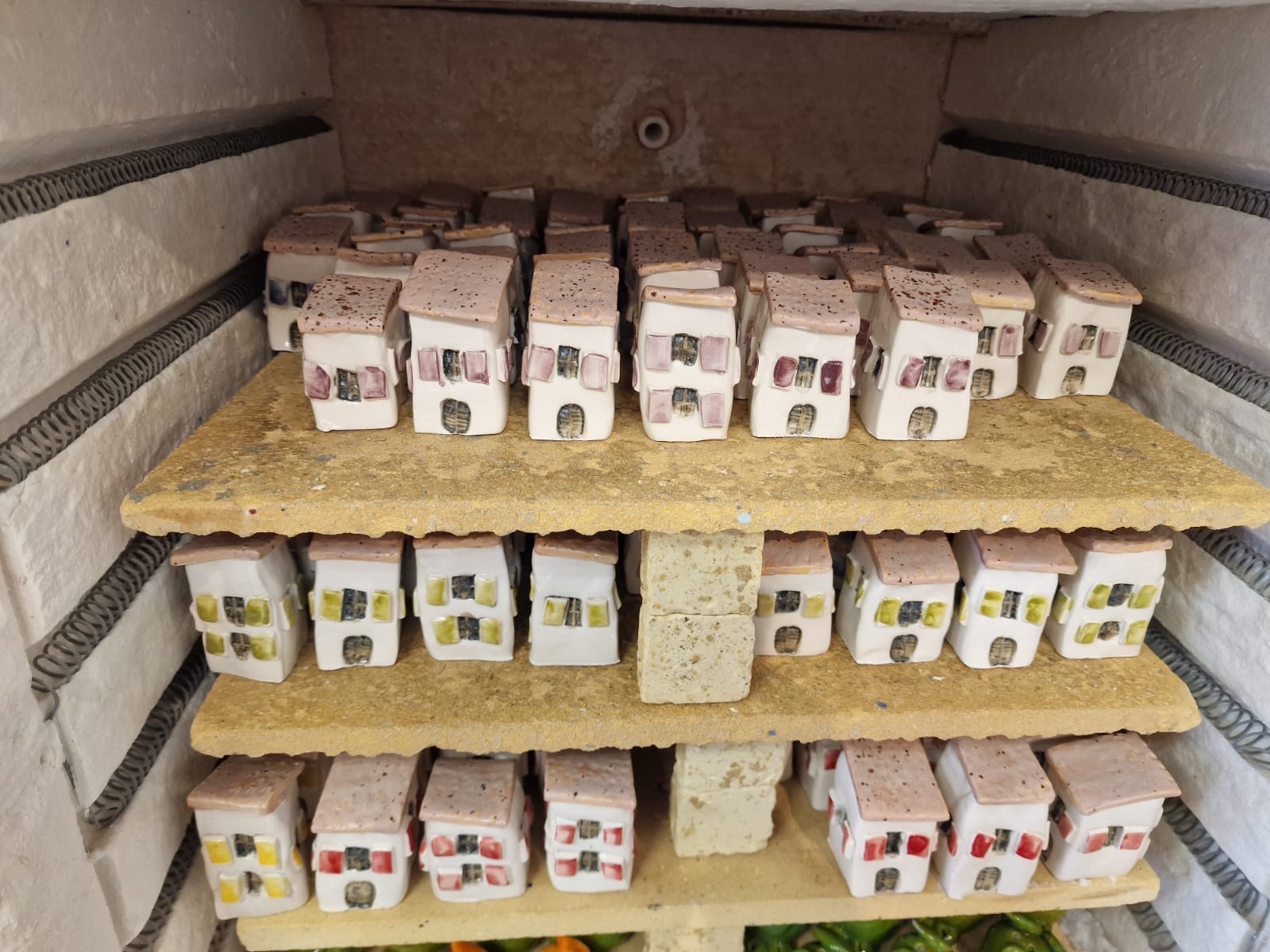
They are my way of putting that whole clustered old town into something you can carry home. Each one is a small handmade house, built and glazed by hand at Nika Horjak Ceramics, with a terracotta roof and shutters painted in one of Piran's colours: Adriatic blue, sunset coral, saltpan yellow, olive green. Each one has the name of the town, Piran, written across the front by hand. No two are quite the same, which feels right, because no two real houses in the old town are either.
People stand them on a windowsill, line a few up like a tiny street, or give one to someone who fell in love with the town. Each little house is €15, which makes it one of the most honest souvenirs you can bring home from Piran: light in a suitcase, and still on the shelf years after the trip.
Where can you find them?
Nika Horjak Ceramics is at Goriška ulica 2, a few steps up from the marina and about two minutes on foot from Tartini Square, right in the middle of the old town the little houses are modelled on. The wheel and kiln are in the shop, so you can often watch the next batch being made; there's more about visiting the studio, and Google Maps knows the name and walks you to the door.
If a whole street of them is calling but your suitcase is already full, the online shop ships every piece insured, worldwide. Come find your corner of Piran, one little house at a time.
Warmly, Nika
Studio · Piran · 2 August 2026
More from the studio
Sold out, down to the last fish
The online collection has sold out, so the website is switching from buying to free reservations for the next kiln batch. What that means, what you can still find on the shelves in the Piran shop, and how to put your name on the pieces you love.
Read →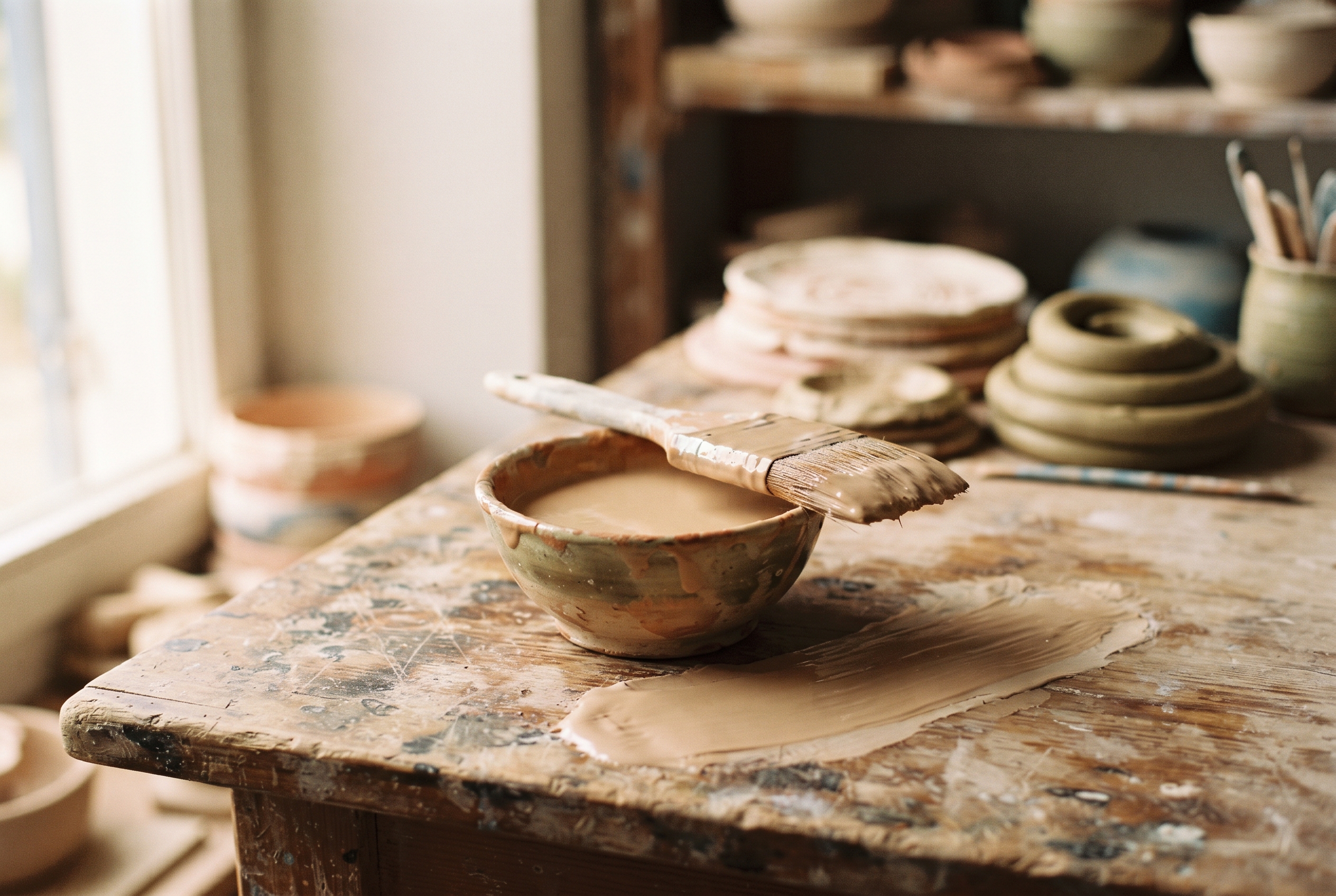
Does clay help with mosquito bites?
A mosquito, a bowl of the “glue” I use to join pieces of clay, and the real reason customers sometimes leave my shop with a smudge of clay on their arm. The pigs, it turns out, were right about mud all along.
Read →
Are there jellyfish in Piran, and do they sting?
Yes, in warm summers jellyfish drift into the bay: the big barrel, fried-egg and moon jellyfish are essentially harmless, the small mauve stinger is the one to watch. And the strange part, a jellyfish day is often the busiest day in the shop.
Read →