5 May 2026 · 7 min read
How a Piran fish platter is made
From wedged clay to glaze pour to second firing, what happens between the wheel and the kitchen table.
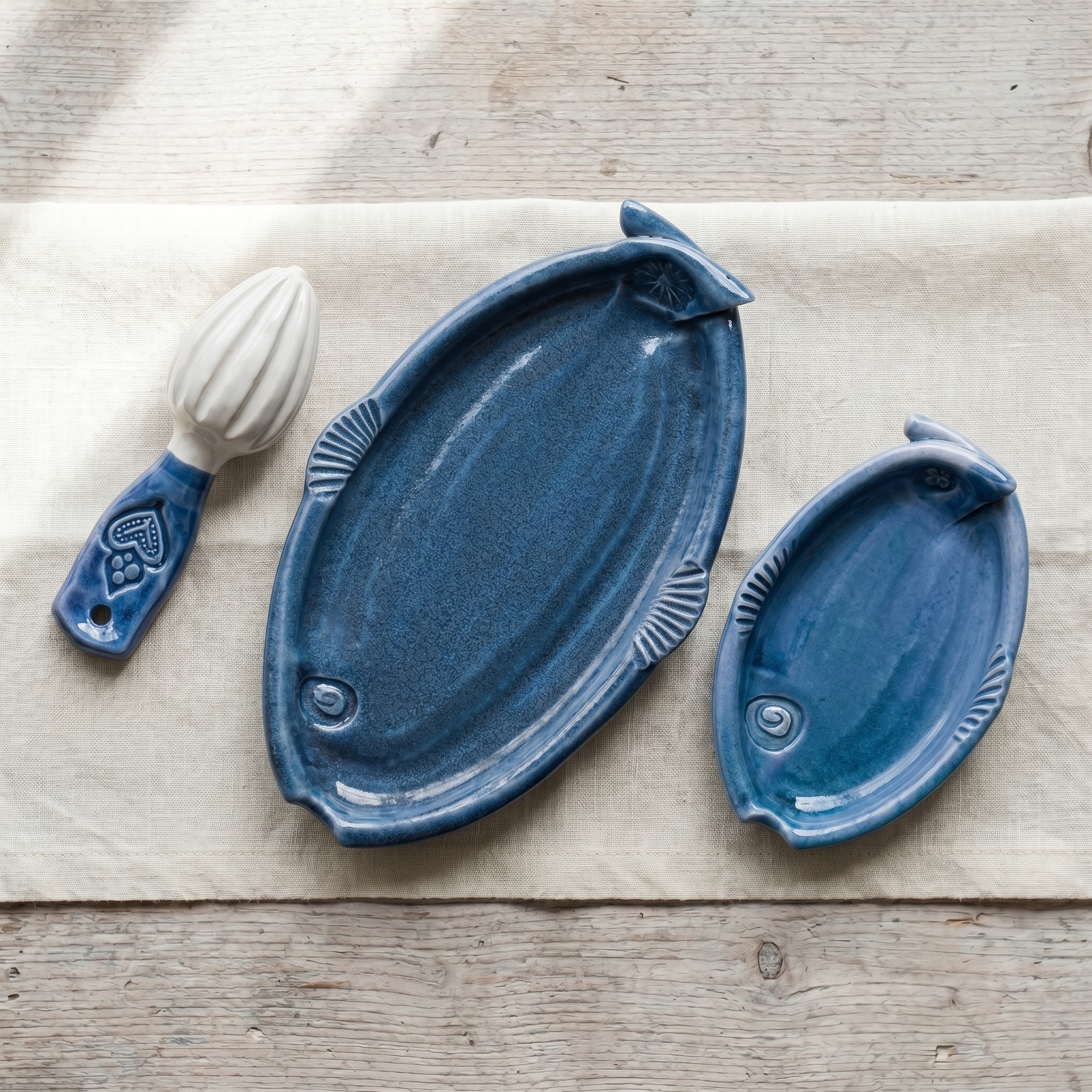
A Bay Fish Platter arrives at a kitchen in Berlin or Ljubljana wrapped in fine paper, weighing about as much as a small book. By the time someone unfolds the paper and sets the platter on the table, the piece has been through eight pairs of hands, all mine. This is what happened before that.
The clay starts as a brick
I work with clay bought from a small supplier in Slovenia. It arrives as twenty-kilo bricks, the colour of wet sand. Stoneware is what most household ceramics are made from, it fires hard and dense, doesn't absorb water, and doesn't crack when a hot oven dish lands on it. It also has opinions. If you don't wedge it well, it will tell you in the kiln, three weeks later, by splitting along a hidden seam.
Wedging is the part of pottery nobody photographs. You take the clay onto a canvas-covered bench and push it forward, fold it back, push it again, for ten minutes. You're chasing two things, air bubbles, and uneven softness. Both are invisible. Both will ruin a piece. If a wedged ball of clay had a sound, it would be one steady note. Unwedged clay sounds like an argument.
A fish, not a plate
The Bay Fish Platter is the largest piece in the studio, and the most expressive. It's hand-thrown in an oval form, then lifted off and set on a board for the fish work to begin.
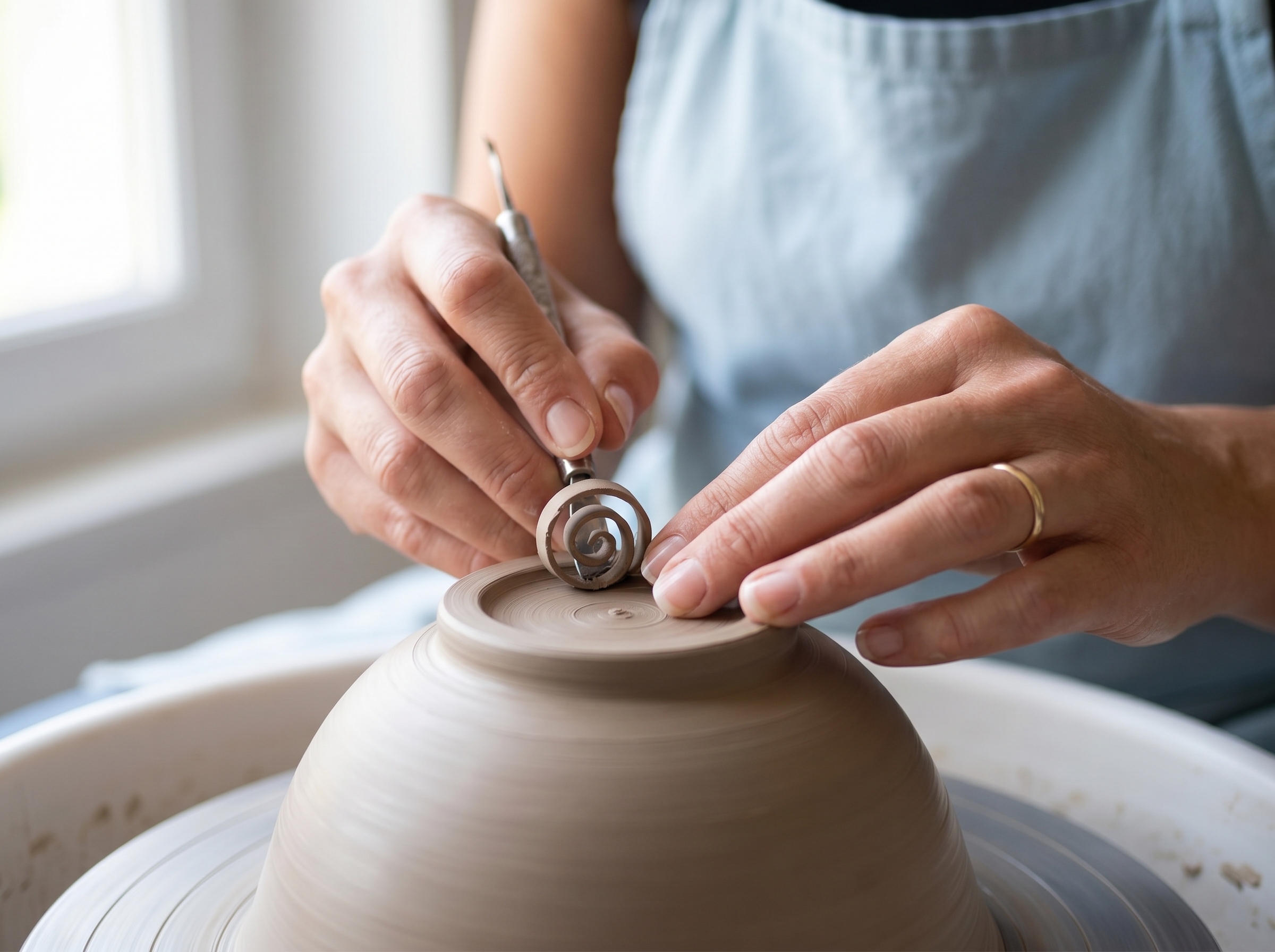
The eye comes first. A small spiral pressed into the surface with a clay tool, deeper at the centre, fading at the edge. Then the radiating fins along the upper and lower edges, scored with a real scallop shell so the glaze pools in the grooves. Then a small embossed flower at the tail, stamped from a self-made clay stamp. The whole fish takes about twenty minutes. By the time I'm finished, the clay is leather-hard, too soft to stack, too firm to push back into a ball.
The first fire
Once the platter dries fully, three to five days, longer in humid weather, it goes into the kiln for a bisque firing. Bisque is the first burn. It hardens the clay into something you can handle without it crumbling, and opens up the surface so it can drink the glaze. The kiln climbs slowly to about 980°C, holds, and cools. The whole cycle takes around eighteen hours. I open the kiln the next afternoon, when it's still warm enough to fog my glasses.
Glaze is mostly water and rock
Each of the studio's ten glazes is a recipe, minerals, oxides, a clay binder, water. The dry ingredients are weighed on a small scale, mixed with water in a bucket, sieved twice. The consistency matters. Too thick and the glaze runs. Too thin and the colour goes patchy in the firing.
The platter is dipped, held by the tail, lowered into the bucket, pulled out, turned, dipped again. It comes out chalky and pale, almost the same colour as the bisque. A glaze does not look like itself until it has been fired. Adriatic Cobalt, in the bucket, looks like grey mud. After the second firing, it's the colour of the sea at noon. This is the part of the job that stays surprising, even now, after years.
The kiln has the last word
The second firing is the long one. It climbs to about 1050°C , hot enough that the silica in the clay begins to glassify and the glaze melts into a hard, food-safe surface. The cycle takes thirty hours including the cooldown. Halfway through, the kiln is so hot the air above it shimmers like a July afternoon.
What comes out is not always what I expected. A glaze pools differently around the fins on every piece. A small speckle in the clay shows up as a flake of iron in the finished surface. A platter I thought would be deep blue can come out a half-shade brighter because the kiln ran ten degrees hotter on the top shelf. Pottery without surprises is pottery from a factory.
Fine paper and an empty box
The piece that's chosen for shipping gets wrapped in fine paper, then laid on recycled honeycomb card. Insured at full value to anywhere it needs to go. Breakage replaced free.
From clay brick to kitchen table is about three weeks of elapsed time, and forty minutes of attention spread across that span. The fingerprints stay on the underside, hidden under the foot. I leave them there on purpose. They're how I know which piece is mine.
The Bay Fish Platter is sold solo, or as part of the Adriatic Set with the Citrus Reamer and Sardine Plate, or in a shoal of three with two small sardines as the Fish Set. Made one at a time, here, by the marina.
Warmly, Nika
Studio · Piran · 5 May 2026
More from the studio
Sold out, down to the last fish
The online collection has sold out, so the website is switching from buying to free reservations for the next kiln batch. What that means, what you can still find on the shelves in the Piran shop, and how to put your name on the pieces you love.
Read →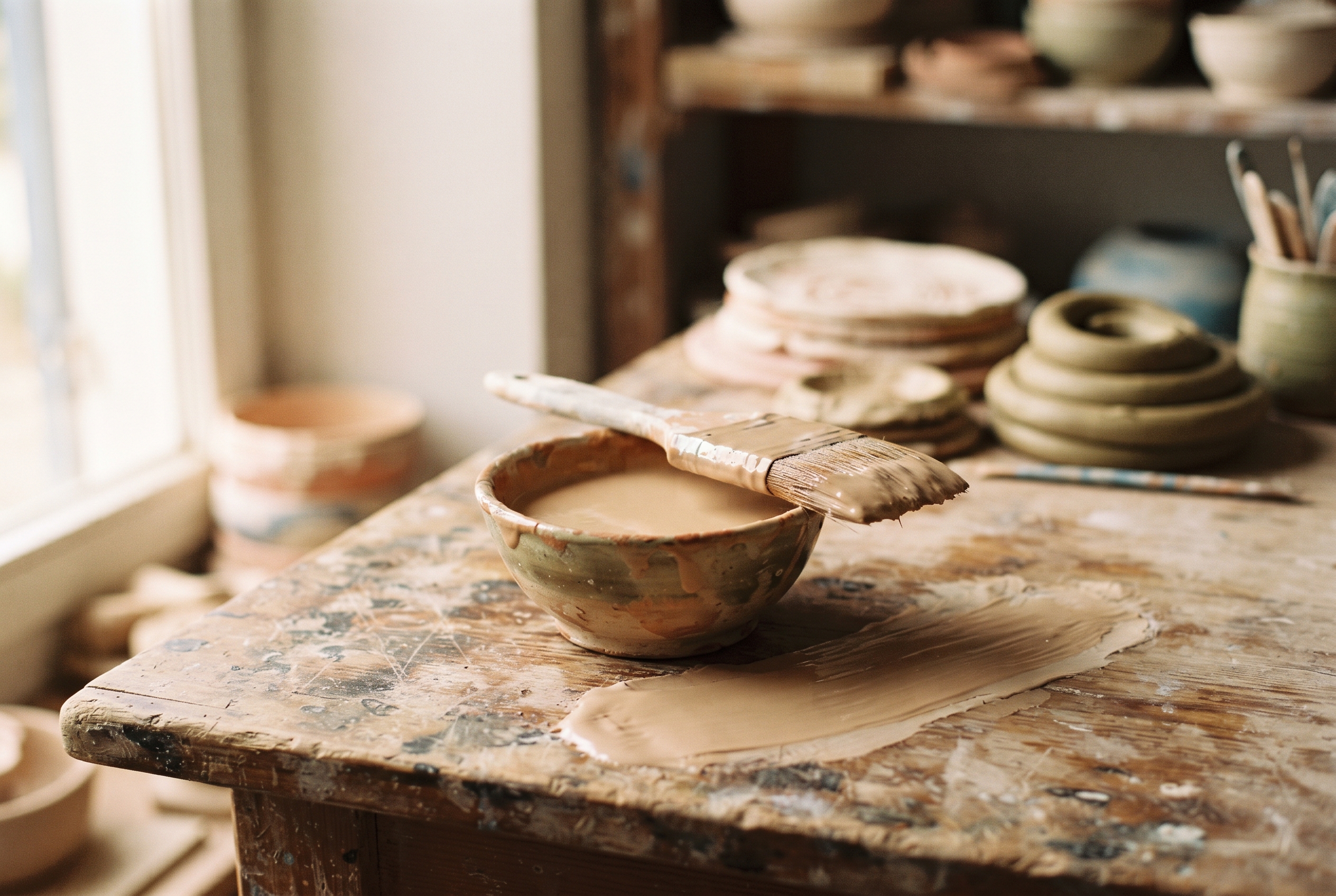
Does clay help with mosquito bites?
A mosquito, a bowl of the “glue” I use to join pieces of clay, and the real reason customers sometimes leave my shop with a smudge of clay on their arm. The pigs, it turns out, were right about mud all along.
Read →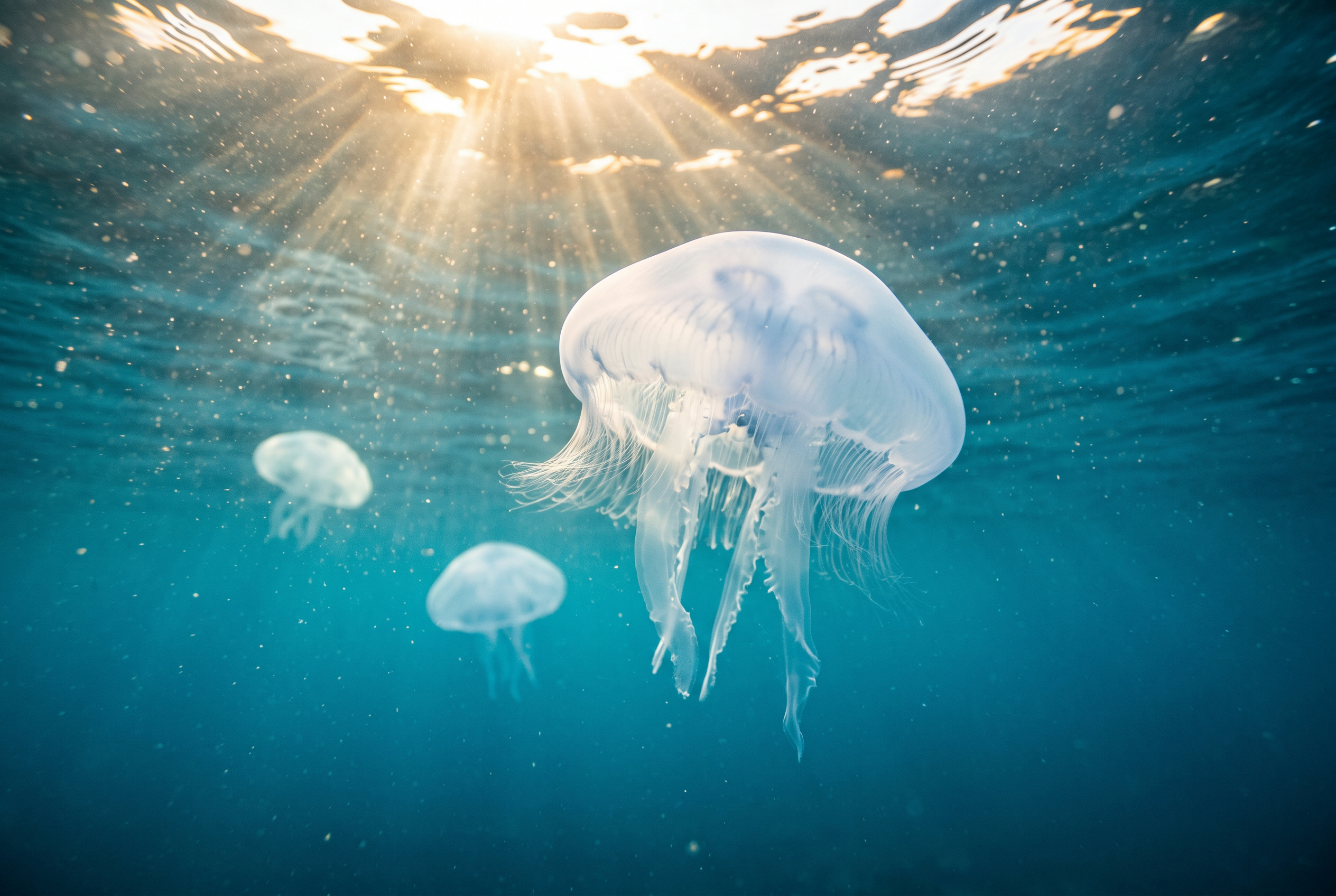
Are there jellyfish in Piran, and do they sting?
Yes, in warm summers jellyfish drift into the bay: the big barrel, fried-egg and moon jellyfish are essentially harmless, the small mauve stinger is the one to watch. And the strange part, a jellyfish day is often the busiest day in the shop.
Read →